In Belgium, young people of foreign origin continue to face inequalities in the job market. Despite having equivalent qualifications, they struggle more to land a job. Numerous studies and real-world testing confirm this: the name on a CV is sometimes enough to decide whether or not they will be called for an interview.
Fortunately, organizations like DUO for a JOB are making the job market more inclusive.
Many obstacles, including discrimination
Newcomers and young people from immigrant backgrounds face several obstacles when looking for work: language barriers, non-recognition of diplomas, limited networks, or a lack of familiarity with workplace norms—the hurdles are numerous. Added to this is discrimination, a proven barrier highlighted by several studies conducted in recent years. Discrimination can be based on skin color, origin, name, or accent.
Twice the effort
A study published in 2016 by researchers Baert and Lippens revealed that candidates with a Turkish surname received 46% fewer invitations to job interviews than those with a Flemish surname. International research confirms this reality: candidates from different ethnic backgrounds are, on average, 29% less likely to receive a positive response from employers.
643 cases of discrimination in 2024
In 2024, the equality body Unia recorded 643 cases of discrimination based on origin, with 29% occurring in the workplace. In Flanders, a study conducted in 2024, which served as the first sector-wide benchmark on discrimination, showed that in 6 out of the 7 sectors studied, cases of discrimination existed based on the ethnic origin or migration background of candidates.
What is the impact of discrimination on young people of foreign origin?
Discrimination is unfortunately a daily reality for young people from immigrant backgrounds.
Discrimination
- deeply affects young people.
- It undermines their self-confidence
- leads them to self-select out of opportunities ("why apply if I don't stand a chance?")
- erodes their trust in the job market and public institutions.
Our mentees also perceive discrimination as a major obstacle. An internal survey of more than 7,700 of them reveals thatone in ten people feels discriminated against during their job searchAnd this figure is likely an underestimate.
"Discrimination really needs to be fought in Belgium. Many people don't realize it, but we experience it every day."
— Malinie, mentee
A qualified accountant, Malinie finds that she is regularly contacted by her temp agency for short-term assignments. But as soon as it comes to contracts with the prospect of stable employment, the phone goes silent.
Many people don't realize it, but we experience it every day.
Aminata’s case also illustrates this reality. During her beauty therapy training, she searched for an internship without success; she was repeatedly told that all the spots were already taken. Yet, when a Belgian friend called on her behalf, an internship suddenly opened up. The recruiter was surprised to see Aminata show up in person.
Thanks to her mentor, Aminata learned how to better showcase her skills, adapt her CV to the expectations of Belgian recruiters, and, most importantly, she was able to benefit from her mentor's professional network. The result: a three-month internship at a company that led to a stable job. "What my mentor gave me is more than just advice. He gave me confidence and opened doors for me."
➡️ More info on our mission here.
Mentors provide support
At DUO for a JOB, young people from immigrant backgrounds do not face these challenges alone. They are accompanied by a mentor: someone who listens, encourages, and, above all, informs them about their rights and how to ensure they are respected.
The mentor's role goes far beyond simple guidance. They help young people see their diversity as a strength : proficiency in multiple languages, cultural background, creativity, and resilience are all assets sought after by employers. But above all, the mentor helps rebuild self-confidence, an essential element for having the courage to apply and make a mark in the job market.
This support creates a safe space where the young person can express themselves freely. The mentor listens, questions, and guides, helping the mentee discover qualities they didn't know they had. Gradually, these young people regain awareness of their strengths and gain the confidence to move forward toward employment.
Beyond personal development, the mentor also plays a key role in opening doors that are often closed to young people from immigrant backgrounds. In many sectors, having a network is just as important as a solid resume. Thanks to their contacts and experience, mentors can create opportunities, support their mentees in their efforts, and act as a lever against discrimination.
Building connections to reduce prejudice
Mentoring transforms not only the mentees, but also the mentors themselves. All of them undergo an intensive four-day training program, during which they learn, among other things, to question their own frame of reference. According to evaluations, 9 out of 10 mentors develop a better understanding of the situation of young people from immigrant backgrounds, and more than a third even see their vision of society profoundly evolve.
Realizing the reality
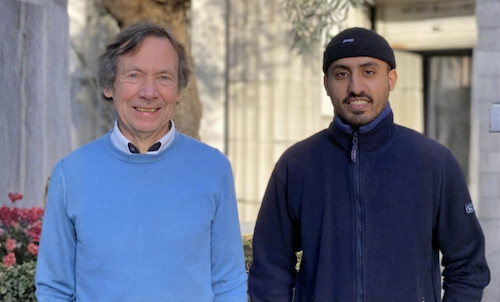
"When you talk to employers—and I was one myself—or look at the media, they all say with their hand on their heart: 'On our end, there is no discrimination; it doesn't exist. Not with us, not with others, it doesn't exist.' I used to say that too. And then, when I came to DUO for a JOB, I realized that this is just talk, and that the day-to-day reality is very far from matching that rhetoric. I think that in this role, non-profits like DUO also have a part to play in changing mindsets. And that is long-term work."
— Paul, mentor and former CEO
When I came to DUO for a JOB, I realized that the day-to-day reality is very far from matching the rhetoric.
In contact with others
The scientific studies confirm what we observe in the field: intensive, well-structured contact is one of the most effective keys to combating prejudice and discrimination. At DUO for a JOB, a genuine community is built around this enriching experience of cross-cultural sharing. These individuals then pass on this experience to those around them, becoming active participants in the fight against discrimination.
"Sometimes, when I talk [with friends] about what I do at Duo, I can see it in their eyes: 'Huh, that's strange, I thought I wasn't racist, but I might not react that way.' It’s by being confronted with people I never would have met otherwise that I realize that, actually, maybe the idea I had of them wasn't the right one. I think we’re all like that. I think it’s interesting to be confronted a little bit with the real reality."
— Paola, mentor
It’s by being confronted with people I never would have met otherwise that I realize it
➡️ Read the article about our mentor training here.
Excluding skilled individuals: a loss for society as a whole
Since 2013, DUO for a JOB has supported over 10,000 young people from outside the EU, helping them unlock their potential and access concrete professional opportunities. 70% of them (re)gainaccess to the workforce thanks to our program. Mentoring helps remove barriers to employment and ensures these talents find their place in the job market.
Mentoring also proves that personal connection works; it
- break down prejudices
- help young people from immigrant backgrounds better showcase their skills
- open doors to opportunities that would otherwise be closed
Fostering inclusion is not just a matter of social justice; it is also a major economic driver. A more inclusive employment policy would help reduce unemployment, strengthen social security, and stimulate growth. The talent is there, but it is too often underutilized due to deeply ingrained mechanisms of exclusion in our society.
Enabling everyone to access stable and rewarding employment strengthens the social fabric and boosts the economy. Valuing the experience of people over 50 and giving them the opportunity to volunteer for a meaningful project helps create a more harmonious society.
But mentoring alone is not enough. The data and testimonials clearly show that hiring discrimination remains a reality. And this cannot be tolerated. It is high time to take structural action. Because as long as competent and motivated people are systematically excluded, we all lose: the young, the employers, and society as a whole.
➡️ Discover DUO for a JOB and its impact here.
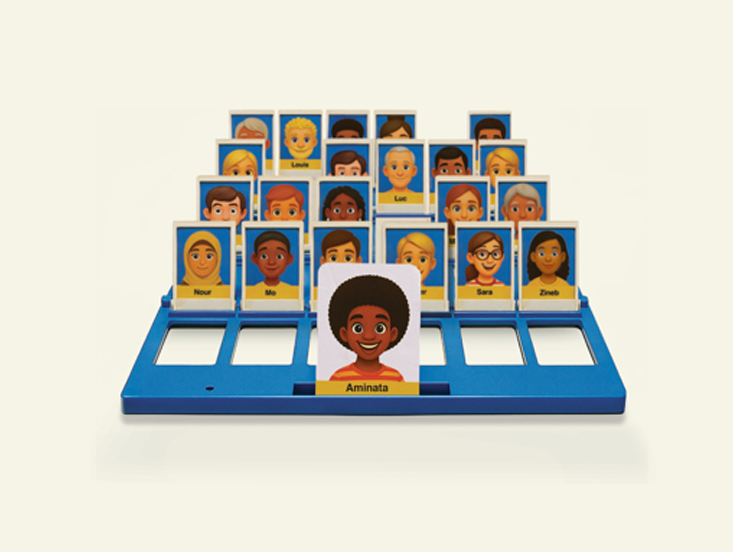
👉 Discover our "Who is it?" campaign against prejudice


%20(1).png)