A subject that comes up often in political speeches is that of abuse of rights, or even social fraud. However, another phenomenon that is little addressed but much more recurrent is that of the non-use of rights. This problem refers to the situation where a person does not use the social benefits to which they are entitled.
There is no precise figure measuring this phenomenon of non-use of rights in Belgium, but several researchers estimate that it is around 40-50% for social integration income (1). There are several factors that can explain this tendency not to use social rights.
1 Lack of knowledge of rights
The persons concerned do not necessarily understand the rights to which they can appeal, do not know the procedures to follow, or the institutions to which they can contact.
Information that is too vague, or too abundant, or sometimes erroneous, can lead to exclusion from the law, due to the loss of time in finding the correct information (2).
2 ️The non-request for rights
Some people don't feel affected by rights or they give up applying because of negative experiences. Political and media discourse can also discourage people from seeking social services. This audience is often represented as' fraudsters' or 'profiteers' and this influences their feeling of legitimacy to benefit from these rights (3).
3 ️Lack of access to rights
Non-access to rights can be caused by increasingly demanding grant conditions, discouraging administrative procedures or difficulties in understanding. One of the problems often singled out is that of the digitalization of services, which can become an obstacle for part of the population, especially for the most vulnerable people (3). This digitization increases inequalities in access to rights.
4 The non-proposal of rights
Social workers point to an increasing workload, which leaves them with less time to personally support each beneficiary, and may omit to offer certain benefits (3). This is particularly true in the context of unemployment reform, as a result of which the various CPAS are facing a marked increase in applicants for integration benefits.
5 ️Exclusion of rights
We speak of exclusion of rights when a person faces a refusal to grant a benefit while he is eligible, or has his acquired right abolished (2). In some cases, obtaining the right may take so long that one is in a case of exclusion (4).
What recommendations?
Faced with the problem of non-use of rights, the Service for Combating Poverty (3) advocates the automatic granting of rights. It also recommends the provision of accessible and understandable information, as well as the simplification of procedures and legislation.
A mentor can make a difference
The effectiveness of social rights requires an approach that is resolutely centered on the person. The challenge is not only to open up rights, but to make them really accessible and understandable.
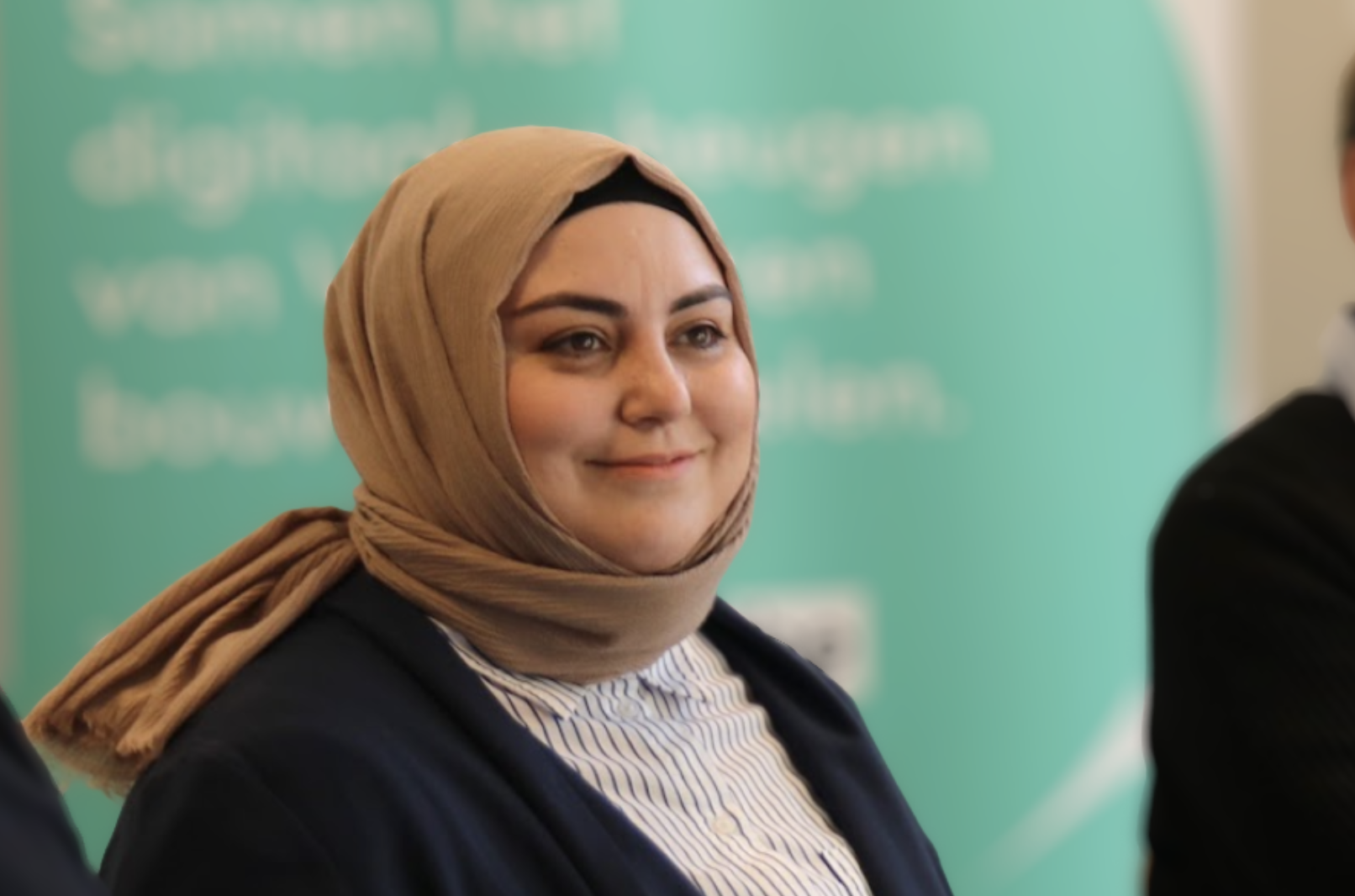
“Coming from Turkey, it came as a shock for me. You don't know how things work here: the government, the job search, the legal aspects, or social security. Even for me, going to a doctor took a year, from a bureaucratic point of view, it was very difficult. And I think with all of that, a mentor is really needed.” Sila, mentee
Mentors play a key role in sorting information, clarifying it, and making it intelligible. By properly informing mentees about existing services, their conditions and access procedures, they offer the opportunity to make choices in an autonomous and informed manner. Mentors ensure that mentees have a concrete understanding of the steps to take.
In an environment that is often perceived as complex and impersonal, mentors bring a human face. Unlike a counter, they look for solutions with mentees. The quality of the welcome and the support relationship is regularly cited as a determining factor in adhering to the mentoring program.
By identifying needs and referring mentees to competent actors, mentors promote networking and reduce the distance between young people and the threshold of access to services. This support allows for more effective use of existing mechanisms and contributes to accelerating and strengthening the socio-professional integration process.
Thus, the work of mentors complements and reinforces the initiatives of institutions and integration actors already present in the field.
“Through the duo, we can give a welcome that is more familial and that concerns one person at the same time in everything that he is, with his desires and his problems of the moment. In fact, it is not like other administrations where you read such a paper for this question or for this problem. Here, it's a totality. You welcome him as a human being, as part of your family.” Nicole, mentor
sourcing
- Katleen Van den Broeck, Périne Brotcorne, Katrien Steenssens, Josepha Moriau & Martin Wagener with Lynn De Smedt (2024). Study on the non-use of integration income and derived rights. Estimation and inspiring practices in the fight against non-recourse.
- Laurence Noel (2018). No take-up.brussels or the non-recourse to social rights in the Brussels Region.
- Service for the fight against poverty, precariousness and social exclusion (2025). Humans as a compass in public services. Biennial report 2024-2025.
- Brussels Health and Social Observatory (2016). Insights into the non-use of social rights and social under-protection in the Brussels Region. Brussels report on the state of poverty 2016.


%20(1).png)